Dad? Bad!
Taking Father's Day off.
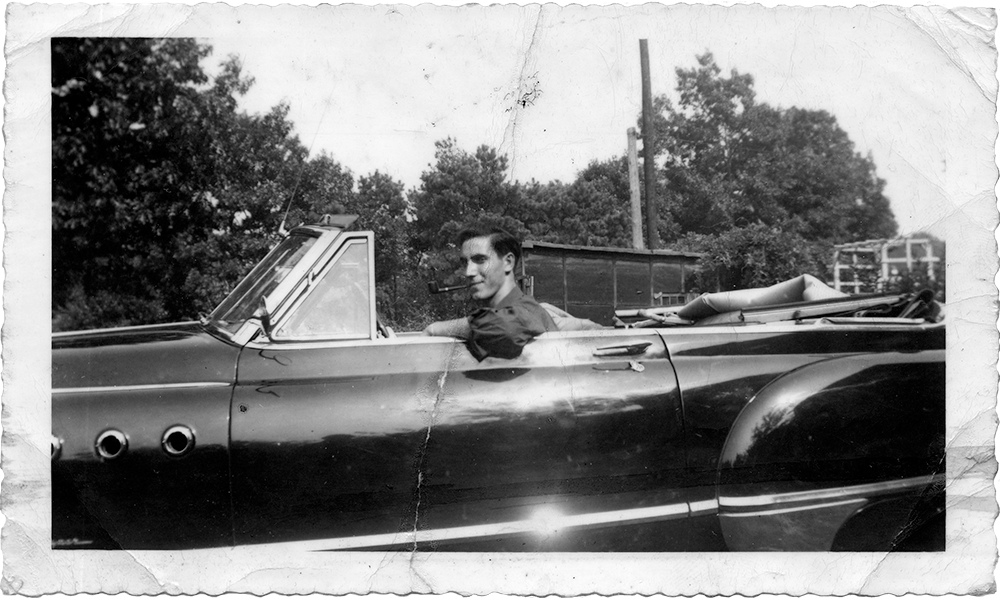
Sunday, Father’s Day, I will again wake to copious dad posts on social media. Per usual, a feeling of having been cheated will descend. It’s not the blurry snapshots but their accompanying paeans:
I wouldn’t be the man I am without you Dad! THANKS!
Dad, you taught me everything I know about love. I’m forever grateful.
My father was wise and kind, generous and gentle. I miss him every day.
What the hell reality is this?
These are words I’ve never uttered. If I wrote anything online it’d be more along the lines of…
Dad, I’m the person I am despite you.
My father taught me what to look for in a good shoe. One with a Goodyear welt, so it’s resoleable. I don’t remember much else.
Dad, You resented your own childhood so much you took it out on mine. I’m forever puzzled.
Am I being hyperbolic, simply forgetting “the good times” or my father’s affection? No. Even as a small, cute child I didn’t feel loved or wanted by him. My earliest recollections approaching anything like “tenderness” involve prosaic moments: on my parent’s bed after a bath, watching “Tarzan” with my father and brothers; visits to his auto repair shop Trophy Motors (“We pump that good Gulf gasoline!”) to play mechanic; long trips upstate in the station wagon to Uncle Homer’s bucolic “country” home (where it was obvious he’d done much better than my Dad). Years later, when I was grown and trying to reestablish a relationship with him, my father would refer to his oldest brother – in Greek – as “The Golden Child.” Convinced his parents sacrificed his future for Homer’s – who got a college education while my Dad went to work – he’d attempt to justify his neglect of his kids by bitching about his “stolen” childhood.
“I had a job from the time I was twelve, thirteen. Bicycle messenger, all over Manhattan. I had to bring in money for the family.”
My father also had complaints about Uncle Emil.
“In Greek he’s what they call ‘Klepto’.”
“Like ‘Kleptomaniac’?”
“Yes. When we had Trophy Motors together he stole from the business.”
“Stolen” childhood. “Stolen” income. My father spent much of his life feeling robbed.
Perhaps the biggest swindle was me.
I always thought my dad didn’t care for me because he was embarrassed by my weight. He was fit, with a lean physique. Me? I heard Doesn’t he look like Uncle Vic? endlessly. My mother’s Uncle Victor was a short, fat guy, round of face. Yet my weight was just part of my father’s indifference and not why he treated me as an afterthought. I didn’t learn the root of this abandonment until 1987. I was 25, living on my own in New Jersey and learned my father and his third wife Karyn would soon move to Memphis. Friends Dave and Donna had recently decamped to New Orleans and issued an open invitation to couch surf for Mardi Gras. Broke and looking for a cheap way to the Crescent City, I called my father and offered to help him move to Memphis, figuring I could hop a Greyhound from there. I roped my friend Kaz into coming along, convincing him it’d be “fun” and soon we’d be on Ursulines slinging back mint juleps with Dave and Donna.
It wasn’t mint julep weather when Kaz and I rendezvoused with my father at his childhood home in Valley Stream on Long Island (all his shit was there, the store having been closed, his Sheffield, Massachusetts house sold). The snow on the ground was nearly as cold as the greeting I got from my paternal grandmother, a woman who was an absolute enigma to me growing up. I’d seen her maybe a half dozen times in my entire life and this would be the last. She betrayed no sense of emotion and I remembered why my mother called her “That block of ice.” Kaz and I helped load up the yellow Ryder box truck in which Dad and Karyn would lead (with their Plymouth Horizon on a tow dolly behind), and we piled into his Chevy conversion van, me at the wheel. It was immediately apparent we hadn’t anticipated several things. The first was the NJ Turnpike. We were stopped at the tollbooth and told we couldn’t tow the Plymouth behind the Ryder truck. My father began fulminating.
“NOW what to we do?! We have to find another way. Local roads. It will take FOREVER.”
He put on his reading glasses, puffed on his ever-present pipe and began pulling out maps, spreading them out on the dashboard. Karyn sat there like a lox, as she usually did. I was standing at the driver’s side window and I’m still proud of what I said next.
“Why don’t we take the Plymouth off the dolly and drive it? Does it have gas”
My father peered at me over his reading glasses, perplexed.
“They said you couldn’t tow it. So we don’t. Kaz will drive the van. I’ll be in the Plymouth. Does it have gas in it?”
“Not much. But we can stop and fill it up.”
This solution hadn’t occurred to my old man and he seemed annoyed I thought of it, yet pleased we wouldn’t be adding six to eight hours to the trip. We quickly disconnected the Plymouth from the Ryder truck, stashed the dolly in the Chevy and made a tight trio all the way to Delaware. Then we reattached the dolly, put the Plymouth back behind the truck and quickly discovered the other unanticipated problem. The Ryder truck was governed at 62 or 65 mph (the Interstate speed limit was still 55 mph) and – heavy laden, with a small car attached – struggled up the slightest incline. With no maps in the Chevy we had to stick close to my dad, doing the same granny lane crawl but slower, while the bulk of motoring humanity beeped our asses and went around, shooting us the finger. At least we had an operational heater and a Beastie Boys License to Ill cassette on repeat to keep us warm. But we never topped 50 except on downgrades or saw much besides a large yellow lift gate with the word RYDER.
Worse than the glacial pace was Dad’s “no fun” schedule. Up at first light. Quick breakfast. On the road by 7 am. Short break for lunch. Back on the road. Drive until dark. Dinner. Hotel. Lights out by 8 pm. By Lebanon, Tennessee Kaz could no longer hack it. The final straw was the argument that ensued as I tried to convince my Dad to let us take the Plymouth into Music City. We’d never seen it and here it was a tantalizing thirty miles west. I thought loaning us the Horizon might be repayment for my quick thinking back at the NJ turnpike. My father absolutely refused, convinced we wanted to go drinking and would crash his car and ruin his plans. Kaz gathered up his stuff and somehow found a bus to the Nashville Greyhound station. He’d get to New Orleans a day early. Me, I ended up sitting with my father in the Chevy van in the rain, having a long, painful conversation about our history and how little we knew each another. I’m still not sure how he got to where he went next.
“You don’t know this but your mother and I hadn’t planned on five kids. Your mother was so Catholic she poked holes in my condoms.”
In light of my mother’s oft-repeated refrains about how she “...never wanted all these kids!” and “I’d get pregnant if your father so much as LOOKED at me!” I couldn’t square what he was saying. But condom-poking was just the start.
“Before you were born I used to work for Justin, the guy your mother started dating after we divorced. We needed the extra money and he was supervising construction projects on the North Shore. At the time we only had one car, which I’d leave with your mother because we had young kids. I’d be driven to the job site in the morning, dropped off and he’d come and get me at the end of the day. Meanwhile, he’d go back and see your mother.”
See? Did he mean fuck?! Fuck my mother?
I was stunned. Could his indifference all along be explained so simply? Every time he looked at me did he think I’m forced to raise and pay for this fat kid that isn’t even MINE?
Like the condoms, his story had holes. He was a mechanic and always owned or had access to several cars. Or could have borrowed a car from one of his brothers. If I wasn’t his why didn’t he challenge my paternity after the divorce, so he could reduce the child support he always complained about? And why did I look nothing like Justin, who had a prominent Romanesque nose?
I went to bed that night with my world blown apart. Could it be true? Is another man actually my father? Why would he say this to me if he didn’t believe it? I don’t remember sleeping but the next day over breakfast there was little conversation. When we were done eating I climbed into the Chevy and followed my Dad to Memphis. It was four in the afternoon when my father dropped me at the bus terminal where we said awkward goodbyes. We wouldn’t talk again for years. I rode a Greyhound overnight to New Orleans, almost getting left behind somewhere in Alabama or Mississippi at three AM when we stopped for food and beverages. Exiting the middle-of-nowhere convenience store I see the Greyhound, all my stuff on it, pulling away into the pitch-black night. I ran alongside, banging on the door, screaming “STOP! STOP!” When the driver finally did, he yanked the door open and barked “I TOLD you I was leaving in ten minutes!”
I arrived in New Orleans with one day of Mardi Gras left, still the only one I’ve attended.
After the Memphis trip I went around thinking Justin, a married man with an alcoholic wife in Amityville, was my actual Dad. My mother had briefly dated him prior to my Dad, then taken up with him again after the divorce. Justin was at our house four nights out of seven, getting sloshed in the living room. He became ersatz dad, lending me money, hiring me to do chores and shuttling me around in a series of white Pontiacs. When I finally got the courage to tell my mother about my father’s theory she yelled “YOUR FATHER IS OUT. OF. HIS. MIND!”
My father WAS out of his mind. To him, there was a wrong way to do things (the way everyone else did them) and HIS way. An absolute control freak, the messiness of childhood was not something he could tolerate. Was it because he had to be responsible at an early age? Did his lack of a childhood mean my brothers and sisters and I didn’t get one? Or was he being loyal to his father and how he handled kids? Whatever the reason, my Dad neither spared the rod nor spoiled the child. He believed in corporal punishment as theater, pulling our pants down in front of the family to deliver an open hand spanking. Or he’d use his belt if the message hadn’t gotten through. When he wasn’t hitting us he used constant threats of physical violence to keep us in check. From an early age my overriding thought around him was Do not anger this man. Though I worked hard not to incur his wrath, it was impossible. My father was an angry man and his family was the outlet for that anger.
When my father left my mother I was eleven, twelve, on the cusp of puberty and desperately in need of a male authority figure. Not to provide “authority” but guidance navigating the shoals of those horrific teenage years. Dad was largely absent, except for the summer I was thirteen and stayed with him and second wife, Stephanie, who was approximately half his age. In a bid to help me lose weight, my Dad signed me up for a day camp. Young People’s Day Camp. Every day, a van would pick me up at his apartment in Scarsdale and take us to a local park, where I’d stand in right field of some baseball diamond, waiting for a softball that was never hit my way. I’d return in the afternoon and when my father got home from work he’d ask what I did that day.
“We played softball.”
Same thing we did the day before. And the day after. After a week of this, he got on the phone and bitched out someone at Young People’s Day Camp. The next day they took us to a pool to swim. That was my only respite from a terrible summer (not true: I also met Mel Blanc at the BZ Big Broadcast of ‘75 weekend Dad and Stephanie dragged me to at some Massachusetts hotel). It was obvious Stephanie didn’t want me around and I could barely interact with her without feeling deep shame. I consoled myself with Mad magazine and the Revell and Monogram model kits I’d brought along. She finally threw a fit at my father, declaring me the most ungrateful child she’d ever known, saying I didn’t appreciate any effort she made. I began crying. My father told me to gather up my clothes, that we were going to a motel for the night. After an hour of heated conversation behind a closed door, he relented. The deepest kindness he’d shown me evaporated. I retreated to my Harley-Davidson chopper model.
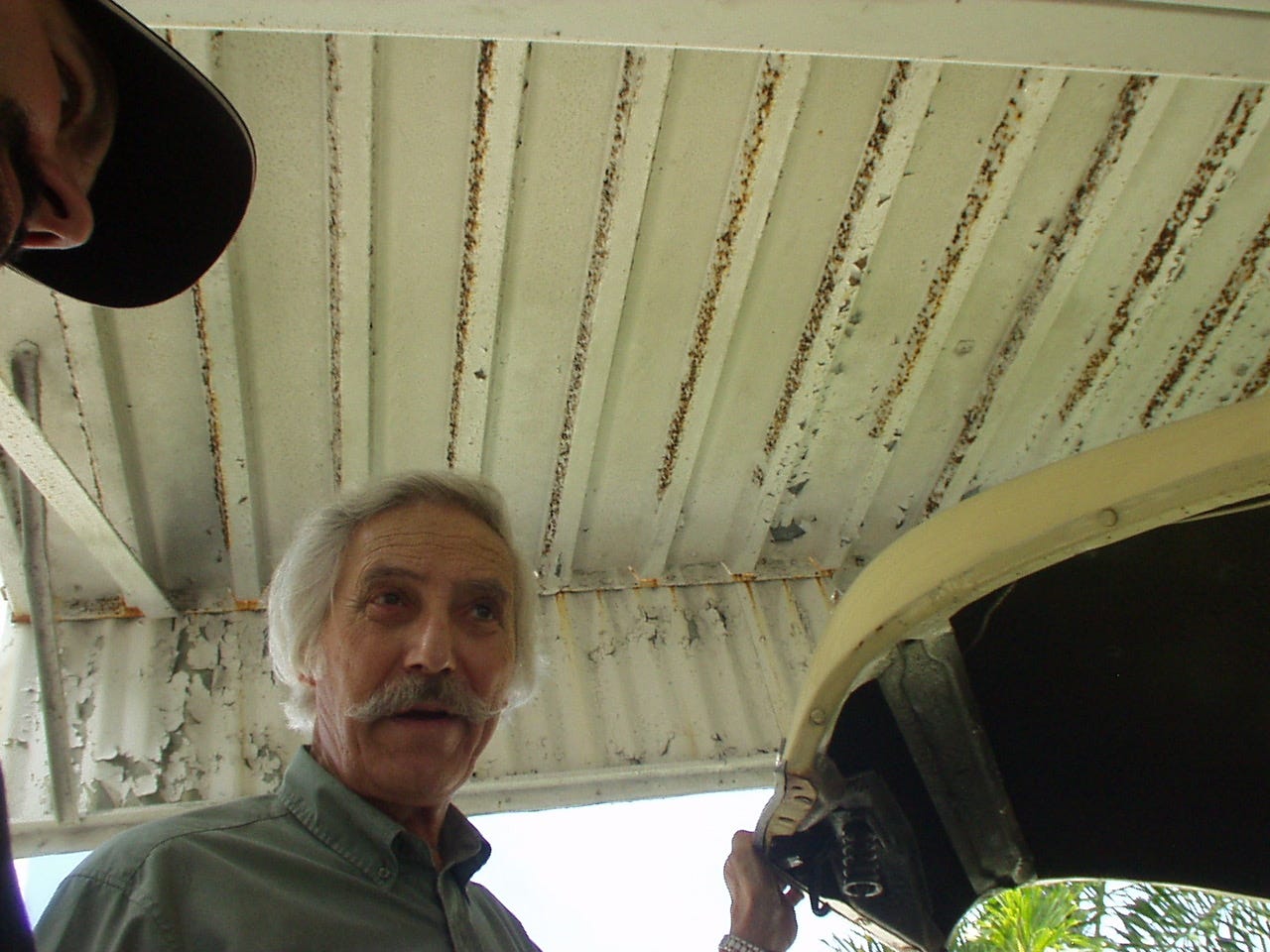
That was the last summer my father spent any time with me apart from my brothers and sisters. He’d occasionally come to see us on Long Island, usually in some impractical bachelor car, like his cream-colored 1966 Mustang convertible with the red interior, the one that screamed “I’m no family man.” With his salt and pepper hair, handlebar mustache and turtleneck he still turned female heads even as he toted his kids back and forth on outings he increasingly resented. Years later he’d complain about how we never wanted to go anywhere with him, that he’d show up and some of us would beg out of going, despite the trouble he’d been through arranging everything. When I asked my sister about this she had a different take.
We were teenagers and had friends we wanted to be with and places we wanted to go, rather than hanging out with a man we hardly knew who was only coming to see us out of some sense of obligation. He never asked us what we wanted to do. He always had something planned and we just had to go along.
After the Young People’s Day Camp summer I discovered the guitar and it became an obsession. I didn’t care about much else. Not my father. Certainly not my mother, sitting in the living room night after night, getting bombed with Justin, the two of them guzzling Screwdrivers, smoking endless Kools and Parliaments, yelling at each other over Tom Jones records. I’d retreat to my room, slap on my headphones and lose myself in “Physical Graffiti” or “Dark Side Of The Moon” or anything I could turn up loud enough to drown out their bellowing.
I went years with no interaction with my father. He’d pay his child support and sometimes appear in our house. I’m not sure why. One time he caught sight of me in my Nihilistics years with my shaved head, bleached jeans and military surplus jacket. He surveyed me up and down with pure disdain and said, “That uniform you’re wearing clearly tells everyone that you’re rebelling and no one is going to want to know you or hire you for a job.”
In the ‘90’s, inspired by my sister Joanie’s reconciliation with our father, I decided to reach out again. I was in therapy for the first time, working out my relationship with my parents, when it occurred to me my father was no longer part of my life. By now he’d given up on Memphis, declaring its residents “too cheap” to support the cooking specialties store he and Karyn opened, so I flew down to Florida and visited them in their huge house with a built-in pool in a gated Jupiter community.
One night after Karyn went to bed I brought up the Memphis trip. Again my father explained why he felt I wasn’t his biological child. Then he added.
“But I loved you anyway, like all the other kids.”
Yeah, no.
This was a love I never felt.
My father went on to build a case for himself as the wronged parent, the one who wanted kids (what about the poked condoms?), the one who was forced out by a cold and unloving partner who no longer wanted him, the one alienated by children who had turned against him. He told me much more of his childhood, how he grew up feeling as though his mother (his father died early) favored her other sons, making it clear he was far from her favorite. How he didn’t further his education, like his brothers, but went to work and into the Army. I tried to tell him something about my childhood, what it was like to put up with my mother and her boyfriend’s drunken shouting matches, hiding in my bedroom with headphones on. He stopped me mid-sentence.
“Headphones? I didn’t have such things as a kid. We were lucky if we had one personal item. A ball. A baseball glove. Otherwise, we shared everything and handed it down.” he said.
His deprivation, casting shade on my “abundance.”
Years after Jupiter, when I got engaged and my fiancée and I thought about buying a house, I reached out to family members, asking for help with a down-payment in lieu of wedding gifts. We already owned toasters and blenders and other household items. My father shocked us by offering a generous amount to help us on our way. When the check came it was for half, my dad explaining in a note that he thought he could do more but really couldn’t. Prior to us mailing out our wedding invitations, my father called to wish us good luck but eventually came around to his true intent: upbraiding me for “asking” him for money.
“You knew we couldn’t afford it, that we’re on fixed incomes.” he seethed.
As if I twisted his arm.
He continued.
“You only reestablished a relationship with me for yourself. You have no real interest in me. As usual, you’re just being selfish.”
Then he tried to doom my budding relationship with my soon-to-be wife.
“You have no idea what it’s like to stay with someone who’s in ill health. You’re the type of person who’d cut and run at the first sign of trouble. You better pray that your wife never gets sick or you’ll know what it’s...”
CLICK.
He was in mid-sentence, raging at me like the old days, when I hung up, realizing I didn’t have to listen to it anymore.
Later, my sister filled in the blanks. Karyn, bipolar, had been put on new medication and gotten worse. She’d become agoraphobic and wouldn’t leave the house. Every time my father had to go out Karyn thought he was never coming back. For the first time since my parent’s divorce my father had someone utterly dependent on him. He was trapped and was wishing the same on me, the one he said wasn’t even his, the one who hit him up for some dough he supposedly didn’t have.
Needless to say, we didn’t invite him to the wedding.
My father and I didn’t speak again until the first Christmas in the new house. We had family over, including my brother Mario (RIP). My dad called his cellphone to say “Merry Christmas” and before I knew it, my brother was handing me his phone. My father tentatively said, ”How are you, kiddo?”
I always hated when my dad called me “kiddo.” Never “son,” always “kiddo.”
We went back and forth a minute, being polite for the sake of expediency, and I handed the phone back to my brother. The next time I heard word of my father it was news of his death. He had a sudden heart attack a week after Mario died from an opioid addiction. My father made a point of leaving nothing to his kids, no money, no belongings – just a few bucks to my sister, his executrix. Whatever he had was left to Karyn, to see to her care. Years later, when Karyn died, my sister called and said there was a bit of money that would pass on to us (and our nephew: my sister Joanie had also died years earlier). It was a small windfall I hadn’t expected and my father certainly hadn’t intended. He just never amended his will. But there was one catch. The wedding gift my father had generously given, then vociferously accused me of guilting him into? In his will it had morphed into a loan, to be paid back before any distribution of funds from Karyn’s estate. He was clawing the money back from the grave.
When my sister imparted this information I blurted out “Are you fucking kidding me?”
I know, I know… she said.
“I‘ll dig out the letter he included with the check, wishing us a happy marriage and saying he wanted to do more. Then I’ll dig HIM up and drag him on Judge Judy and prove that this ‘loan’ was a gift he came to regret because I’m not his, supposedly.”
My sister said she’d handle it, that she knew it wasn’t a loan.
When my mother died I decided to do a DNA test to see if the boyfriend was actually my father. Secretly, I wished it was true because Justin was in failing health, had no children and had amassed considerable wealth. He held blue chip stocks and had property out in Montauk. For years my mother talked about how “that bastard” was going to leave a small fortune to his father’s medical school. She’d worked on his will and knew how much he was worth. I had visions of visiting Justin in his nursing home and wheedling out of him the story of how he seduced my mother around New Year’s Eve, 1961.
After initially running the DNA test with my sister, forgetting my 8th grade biology, I talked my first cousin JD into doing the test. It turned out we shared a male ancestor. My dad had been my dad all along. Shit. No blue chip stocks. No Montauk property.
When Father’s Day rolls around I try to stay positive and search for my inheritance in what my father passed down: the thrill of the hunt at a flea market, the love of well-made older things that last, and the satisfaction I feel when I’m at my workbench, taking something broken apart, making it work again. My father was a master at repairing anything mechanical. Anything human, not so much.
If you had or have a dad who loved you, who cared for you, who helped you when you needed it, who didn’t regret that help or resent you for asking, who guided you sagely through life, who embraced you as his own even if you weren’t, happy Father’s Day.
The rest of us have another 364 days to not think about it.